Emma’s fight to survive pneumonia
A Woman of SubstanceEmma Harte’s fight to survive pneumonia turns a medical crisis into a test of the same resolve with which she has built and defended her business empire. At seventy-eight, seriously ill and feeling abandoned at a moment when her plans for the future are at stake, she determines that she must live long enough to secure what she has made.
Crisis and unfinished business
In the weeks before her illness, Emma has concluded that her family will dispute control of her business and the distribution of her wealth after her death. She is preparing legal documents intended to prevent the store and wider empire from being broken up, and to pass her property into the hands she chooses. By the weekend before the crisis, most of the documents have been signed, witnessed, and sealed.
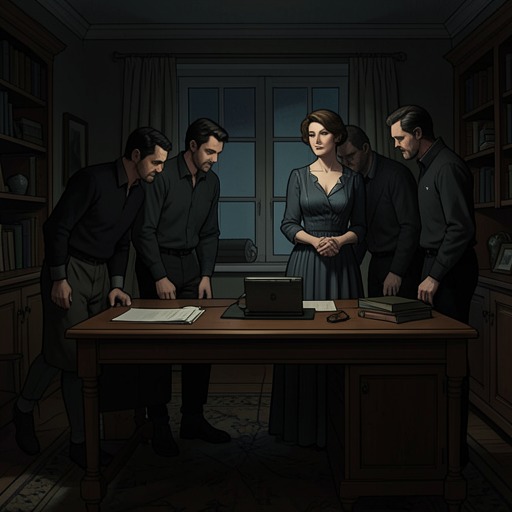
The following Monday, intense chest pains and impaired breathing leave her unable to get out of bed. She allows Paula to call Dr Rogers, her London physician. Emma has suspected for several days that the pneumonia has returned; what she overhears between the doctor and Paula confirms her own diagnosis. Later that morning, an ambulance takes her to the London Clinic. Before leaving, she asks Paula to bring Henry Rossiter to see her that day.
Henry arrives in the late afternoon to find Emma in an oxygen tent, surrounded by medical equipment, nurses, and doctors. She tries to ask whether everything will be all right, but he thinks she is asking about her recovery and repeatedly reassures her that she will soon be home. Emma is actually asking about the liquidation of her assets, which Henry is handling. His concern comforts neither her nor her urgent need for an answer; too weak to make herself understood, she is left fuming at the misunderstanding.
The decision to live
The failed exchange with Henry sharpens Emma’s sense that, when the gravest matters arise, she is alone and must depend on her own resources. She applies that conviction to the immediate crisis: to finish the remaining work of preserving her empire and dynasty, she has to live. She resolves not to succumb to the illness and commits all her willpower to surviving it.
As she drifts into sleep beneath the oxygen tent, the narrative turns from the frailty of her old age to a remembered landscape presented as a dream. Emma is sixteen again, running across the moors above Fairley village toward the Top of the World. At Ramsden Crags she sees Edwin Fairley climbing toward the ledge where they used to sit. He helps her up, and the dream gives them a shared promise of life without end. It breaks apart as she falls into a profound sleep. The scene places her present struggle beside an image of youthful intimacy and imagined permanence, without undoing the loneliness she has just recognized.
Recovery and return
Emma survives. Others call it a miracle that a seventy-eight-year-old woman has lived through another attack of bronchial pneumonia and its complications. She is discharged from the London Clinic after three weeks, recovering with a speed that amazes those around her. Emma does not explain her survival to them; privately, she understands it through her conviction that the will to live is the strongest force in the world.
After two days of enforced rest at her house in Belgravia, Emma leaves her bed and goes to the store despite her doctors’ advice. Her return is not portrayed as simple recklessness: she believes she knows her body and can judge that she has recovered. Employees greet her warmly, largely treating her return as a matter of course, while Paula follows anxiously, concerned that she is risking her health. Emma briskly rejects the fuss and resumes her familiar, energetic bearing.
Significance
The illness exposes how closely Emma’s sense of survival is bound to the future of her business. Her determination to live is not presented only as resistance to bodily weakness: it is also the means by which she intends to complete the legal arrangements that will protect the store and the wealth invested in it. The crisis briefly forces her to rely on other people, but the misunderstanding with Henry and her realization of solitude return her to self-reliance. Her rapid return to work makes that resolve visible: recovery is measured not only by leaving the hospital, but by reclaiming the responsibilities she believes no one else can carry.